

Where To Go For Sweater Repair
Getting the opportunity to try uncommon products is one of the great things well-nigh working at UncommonGoods. While many of these product-testing experiments get gift labs, every at present and and then we detect a new good with and so many uses we can't fit them all in one "report." The Woolfiller Sweater Mending Kit is an instance of only such a product, AND, since associate heir-apparent Katie and community moderator Cassie both had their eyes on this winter must-take, we decided to diverge from the traditional gift lab format and encounter just how many uses we could come up with for this clever kit. Four are outlined below, but Cassie and Katie agree that the fun doesn't have to stop there!
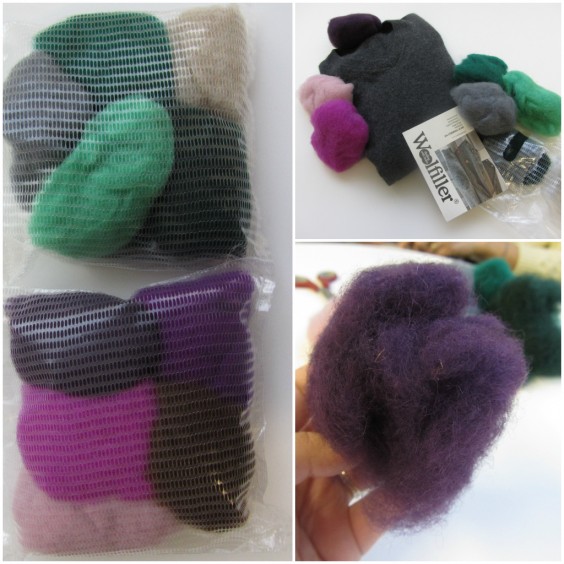
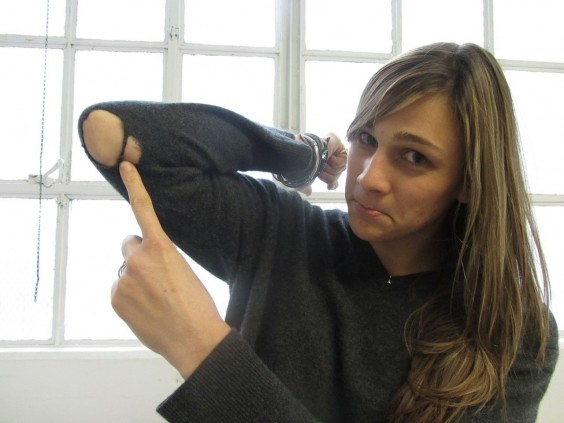
Katie: Having spotted the Woolfiller at a major New York merchandise testify terminal year, I was anxious to get such a solution-oriented product into our assortment. A fun, easily-on kit to patch up an old favorite or add some flair to a basic sweater seemed like the perfect DIY project about anyone could adopt.To put this production to the test, I decided to tackle two specific projects, the first was to patch the embarrassingly large (and winter arctic-inviting) elbow holes on one of my favorite sweaters. Afterwards completing the elbow pigsty patches, I wanted more than – I had seen some fun images the company provided where people used the vivid colored wool to add some artistic patches as flair and I wanted to endeavour this out, which lead to Projection 2: adding flair.
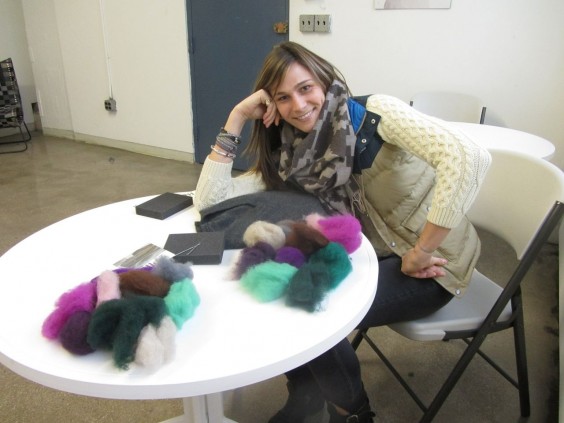
Cassie and I decided to each buy one kit – a match made in heaven as this greenish-doting girl, could partner with Cassie'due south purple-loving self and combine to make a cornucopia of rich, jewel-tone wools mixed with solid staple colors (greys, blacks, beiges) which came in extra handy for my second project. Simply I would likewise say that i kit is entirely sufficient – each comes with bright color options every bit well as neutral, basic colors which should cover a range of sweater needs. And to that point, upon unloading our kits onto a communal tabular array, we were both surprised by how much wool comes in each kit – we went about tearing each ball into half and divvying upward our goods.
Project ane: Assuming Elbow Patches
Katie: After some deliberation, I chose to patch the elbows of my dark, grey sweater with the natural beige wool – aiming for a contrast patch expect – like your gramps's sweater.
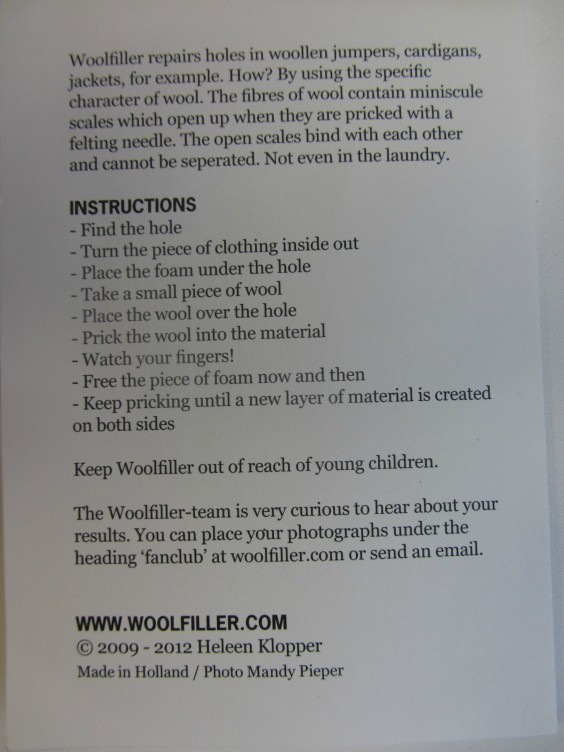
Subsequently choosing the colour of wool, I reviewed the simple instructions and went to work. I used a pair of scissors to brand the first of my ragged elbow holes into a smooth, even oval to ensure my patches would be as clean-looking as possible. Next, I ripped a decent amount (possibly the width of a lime) of wool off the main piece, turned my sweater inside out, put the provided cream piece in the sleeve, laid the wool over the pigsty, and began poking!
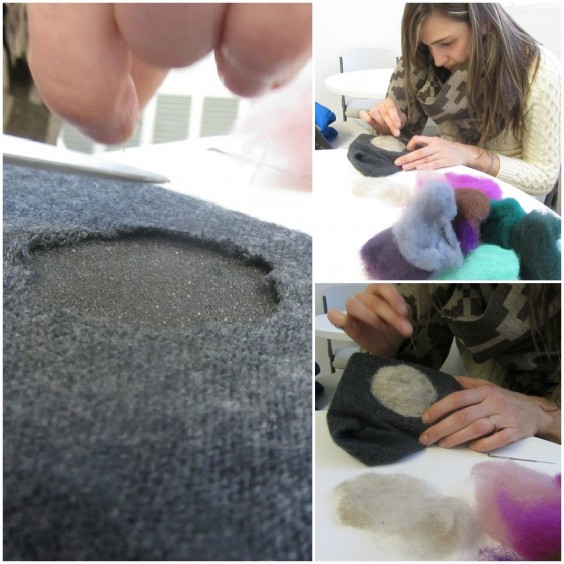
After completing the first of 2 patches, I turned my sleeve right-side out to audit my work. Herein I learned i of the bigger lessons of the projection – while the instructions suggest turning your piece inside-out to use the product, I found that by doing that I was less aware of the exact line of the hole (because the piece of wool covered it) and as a result I ended up with what can only exist described as a "halo" effect around the patch – one sold patch, with a calorie-free band of excess wool surrounding it.
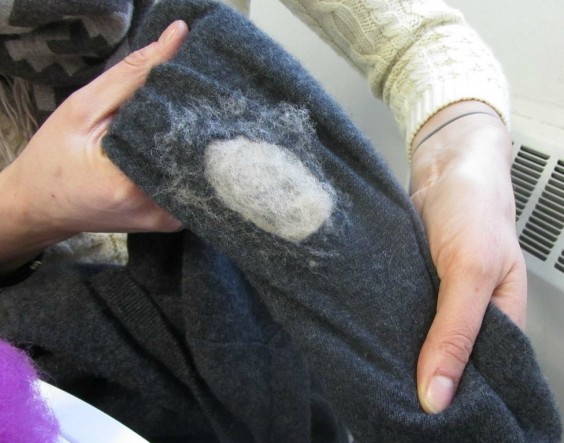
On elbow #2 I decided to endeavour some other approach – again I cutting away the ragged border to make a smooth hole, merely this fourth dimension I left the sweater sleeve correct-side out, I inserted the felt slice, and lined the wool up perfectly with the hole and started poking away. I institute when I did it this way, I was able to guide the wool into a perfect oval while poking and overall felt much more in command of the overall work. When complete, the patch appeared much more perfect and solid.
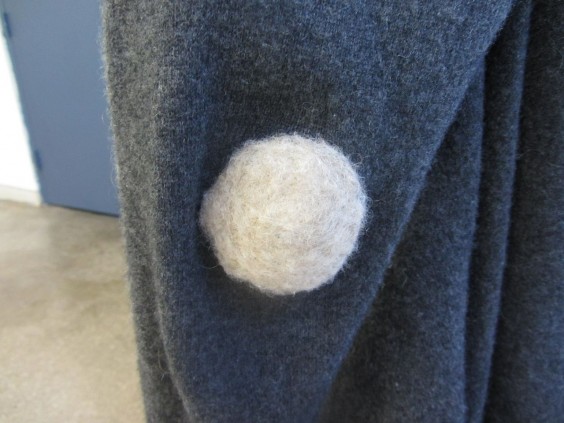
Later completing the elbow patches, I moved onto my next experiment…
Project ii: Calculation a Little Flair
Katie: I decided to do a simple trio of mini circles with bright colors. Having learned from my elbow patches, I left my sweater right-side out, tore of tiny circles of wool (virtually the size of a quarter), and started poking abroad! I found my technique was much-improved, I used my fingers to expertly guide the wool and earlier I knew it I had my little flair added in.
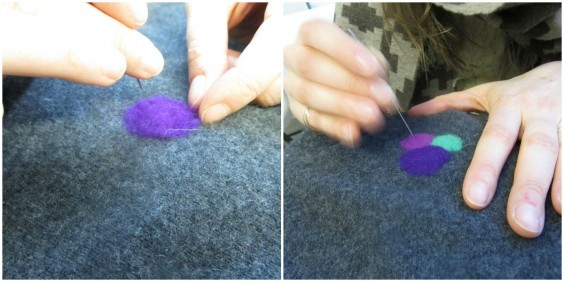
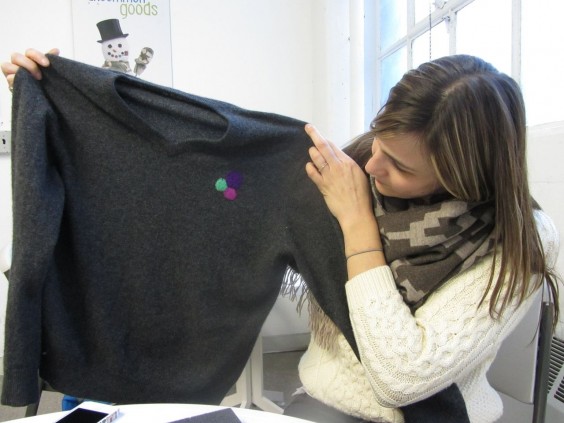
In the interest of science, here are my primal Findings:
Finding #i:
This kit comes with a lot of wool. I was surprised past how picayune wool it took to patch upward my rather large elbow holes. I have a lot of wool leftover and am but waiting for a quiet Sunday to get to patchin' my slew of other well-worn sweaters.
Finding #2:
The more than yous poke – the more "felted" the wool becomes. Skilful thing poking is super fun.
Finding #3:
Every bit mentioned above, the kit recommends turning the piece inside-out and and then using the wool filler, nevertheless, I constitute this created a slight 'halo effect' around the bodily patch, and when I tested using the kit the reverse way – with the sweater turned correct-side out, I was very pleased with the results – I could control the pokes more and create a make clean oval with no halo.
Finding #iv:
The Woolfiller is a actually like shooting fish in a barrel, creative style to patch.
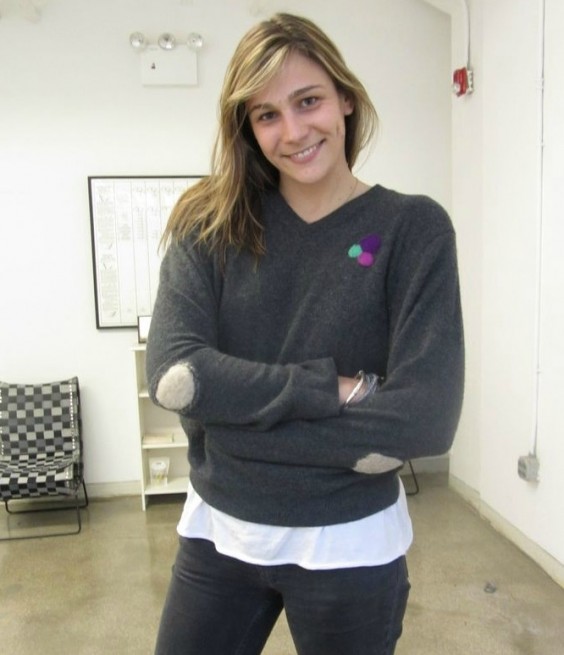
Having now completed two projects on one dear, well-worn sweater, I can vouch for the usability and honestly–the fun– this product provided.I passed the DIY-sweater-patch torch along to Cassie.
Project three: The No-Prove Repair
Cassie: I as well had a beloved sweater with a hole in it. Unlike Katie, I didn't want my repair job to exist super noticeable. My hole was just under the arm of a multi-colored sweater, so I hoped I could blend the new wool in and make the sweater expect similar new. Taking her findings into consideration, I began my practise in craftology.
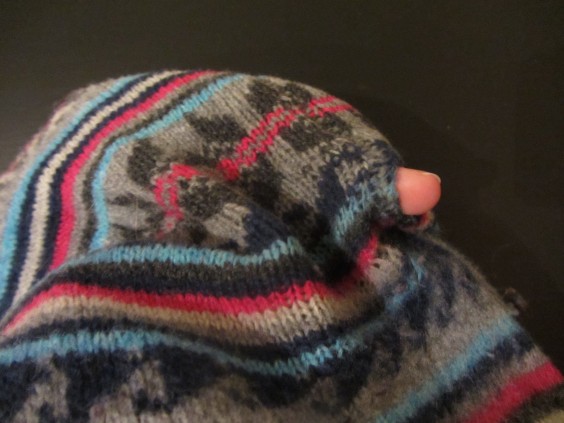
I started out the aforementioned fashion, past finding the pigsty, turning the sweater within out, and inserting the foam block. Then I picked out a couple of colors that I thought would mix nicely with my sweater'southward blueprint.
I placed the wool over the holes and started poking. Information technology was really fun, and, because the sweater is 100% wool the new wool took almost instantly. I pricked at the wool with the felting needle for less than a minute before the patch was completely fastened, but I kept at information technology for a lilliputian longer, just to make sure information technology was composite well.
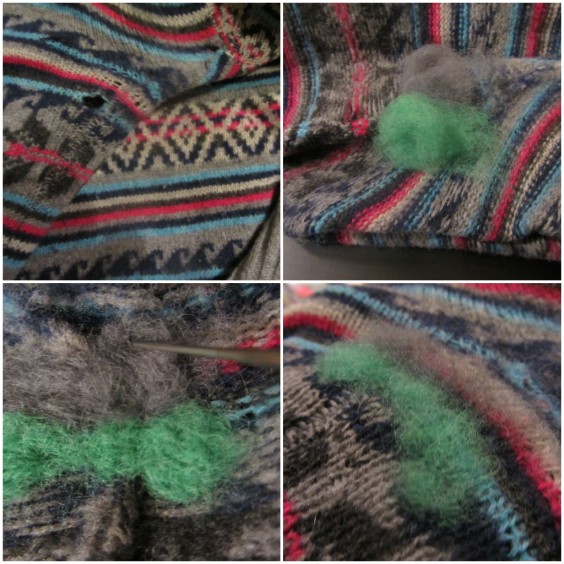
I turned the sweater back inside in and gave it a few more than pokes, just to give the wool a smoother look. The finished production looked good, and the patch feels just similar the remainder of the sweater.
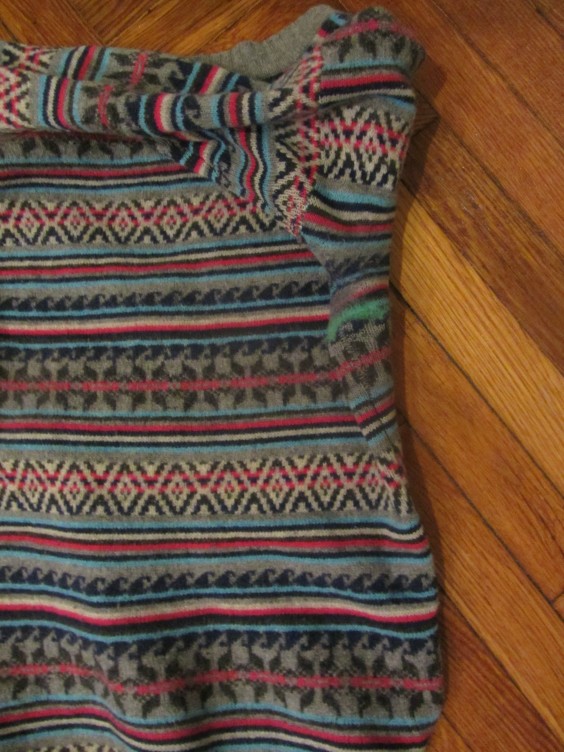
While I agree with nigh of Katie's central findings, I plant that starting with the sweater inside out worked not bad for a small, blended patch. She preferred the expect of the patch when she placed the wool directly over the hole without turning her garment within out first. I'd recommend doing a test on your own slice, past woolfilling just a pocket-sized department of the patch, before completing your ain project.
Projection 4: Super Star Manner
Cassie: Giving my sweater a quick fix was fun and easy, merely after seeing Katie'southward assuming patches and the little bundle of flair she added to her project, I was a fiddling jealous. I wanted to give my own colorful creation a attempt, so I decided to add together a little shape to an onetime cardigan.
First I drew a star shape on a small piece of scratch newspaper. Then, I cut out the star, leaving an outline. Next, I placed the outline over the elbow of my sweater. (Think to insert the foam block starting time.)
I didn't plough the sweater inside out this fourth dimension, since I wasn't actually making a real "patch," I was just covering upwardly the existing material with new wool.
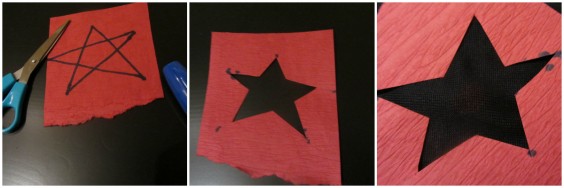
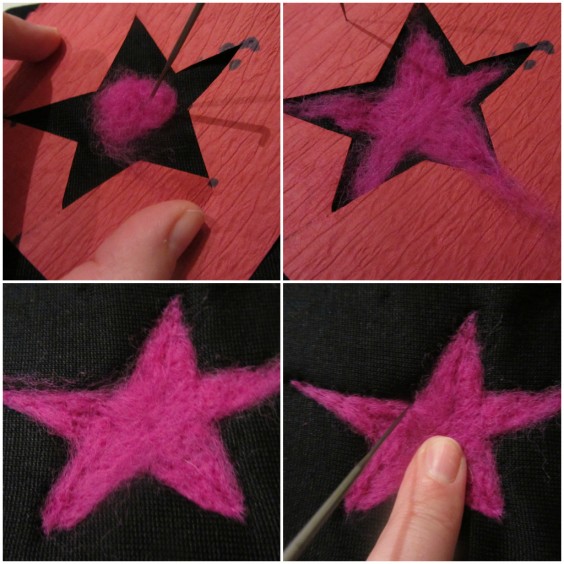
I put a little brawl of bright pinkish wool in the eye of the star shape, and then started stretching it out to make full the cutout as I poked information technology with the felting needle. I didn't secure the star before starting this process, which made information technology a fiddling trickier than it had to be. Next time I'll concord information technology in place with some textile tape or a prophylactic pivot.
I gradually added more wool and pulled it into the shape of the star as I worked at it with the felting needle. One time I had the outline filled in I removed the newspaper and and so poked carefully around the outside edges of the star to requite it a sharper shape.
Since the cardigan isn't entirely wool (information technology'due south a blend too containing nylon and cotton), it took a lot longer for the woolfiller to adhere this time than it did with the 100% wool sweater I'd used it on earlier.
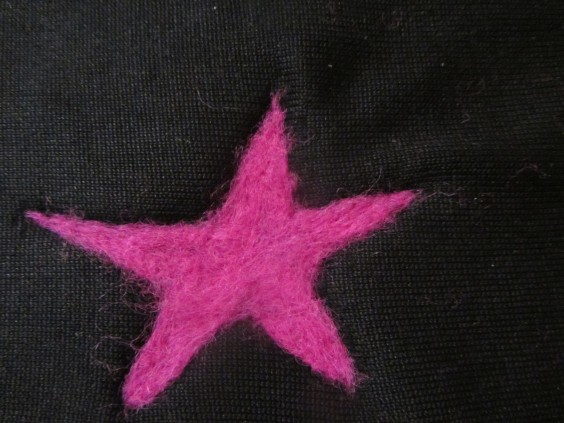
The star turned out well, just in that location was ane problem. I was so focused on creating my shape that I forgot to move my foam block the whole time I was poking. The wool (and the sweater) got stuck to the block, so It was somewhat difficult to remove when I was done. Make sure to readjust the block several times during your project to brand certain this doesn't happen!
I'll definitely endeavor this again adjacent time I want to give an old sweater a new expect. Next time, I might endeavor a centre, a triangle or square, or maybe even a letter of the alphabet.

Through our multiple sweater patching projects, we learned that the Woolfiller Sweater Mending Kit is a bang-up way to repair a damaged sweater, give old wool a new look, or add a personal touch to your favorite pieces.
And, bonus, it's non just for sweaters. It works on any pretty much annihilation fabricated of wool!

Where To Go For Sweater Repair,
Source: https://www.uncommongoods.com/blog/2013/repair-wool-sweater/
Posted by: ledesmasaidecalown.blogspot.com
0 Response to "Where To Go For Sweater Repair"
Post a Comment